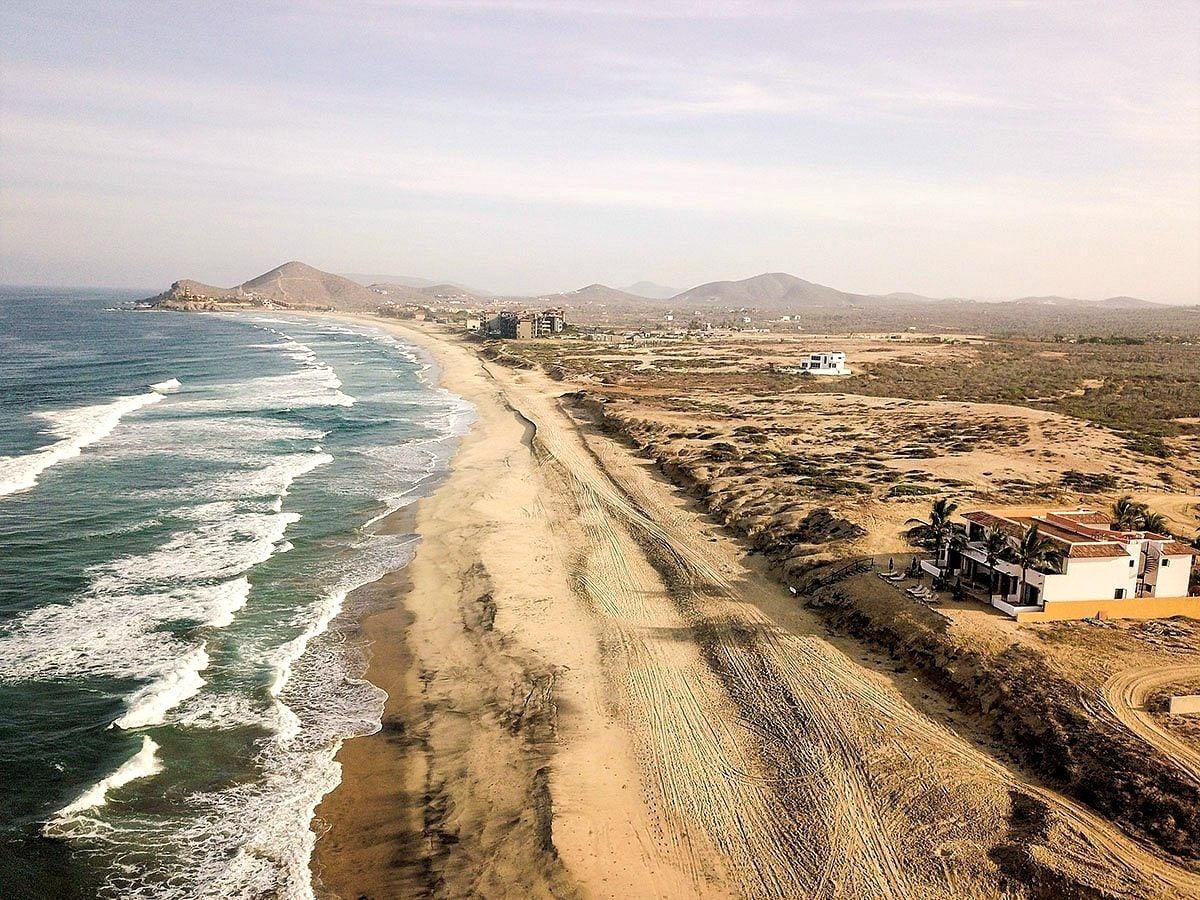
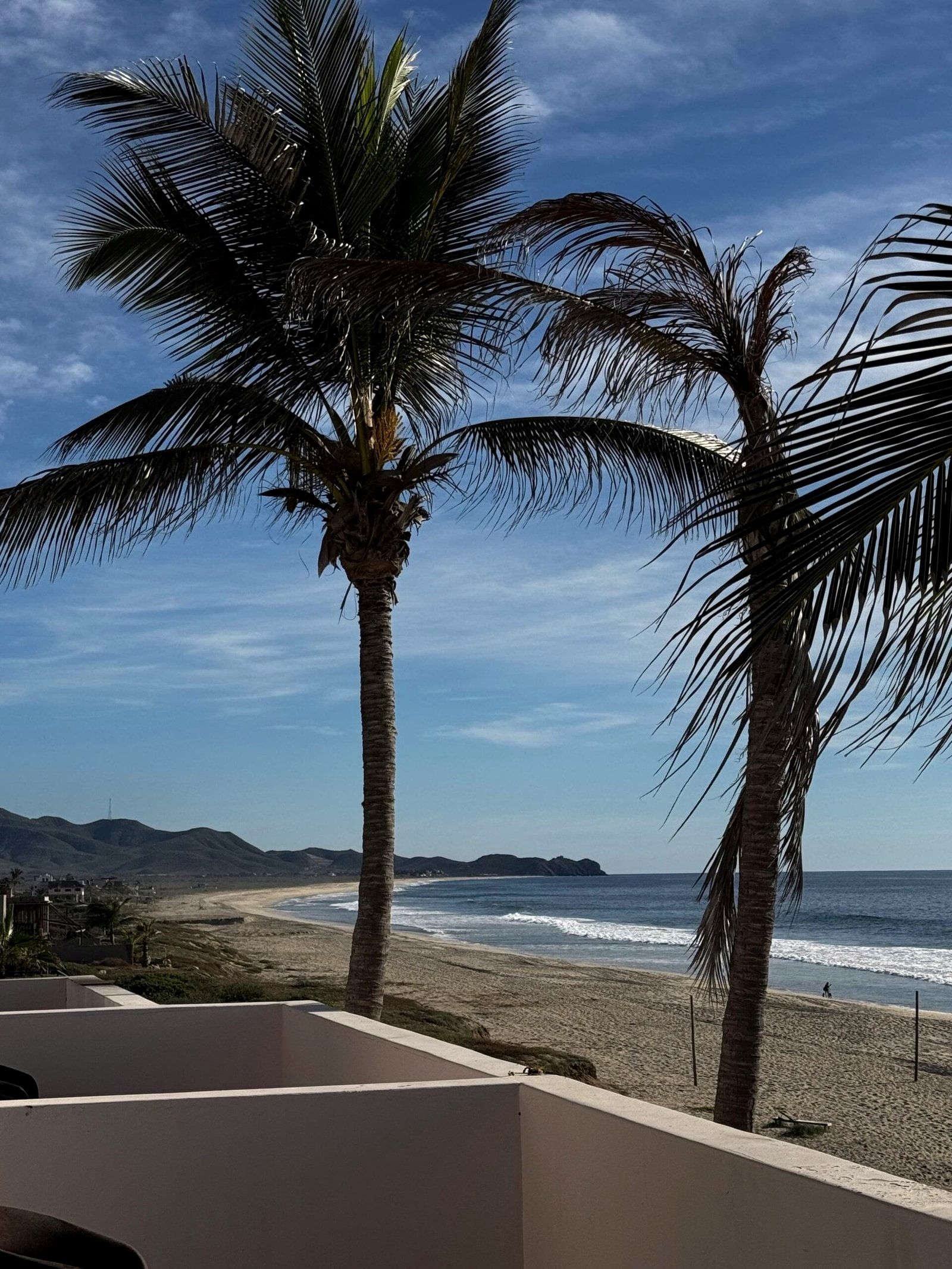
The beach
Can You Swim at Cerritos Beach? Conditions and Safety
Yes, and that is genuinely unusual on this coast. Here is why Cerritos works when the beaches on either side of it do not, and what to watch for.
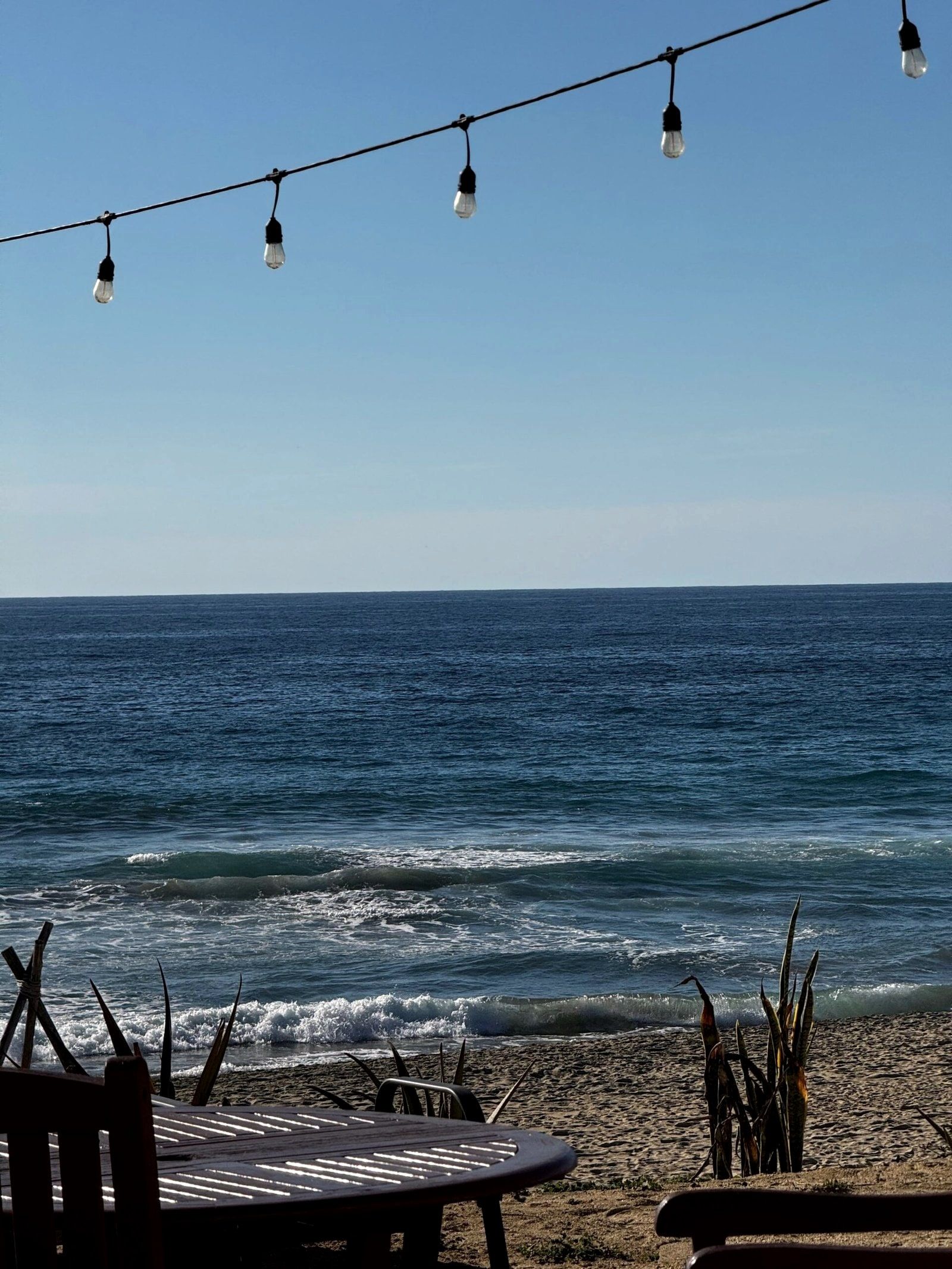
Short answer: yes. Playa Los Cerritos is one of the few beaches on the Pacific side of Baja California Sur where swimming is genuinely practical rather than merely possible.
That is worth stating plainly, because most of this coast is not. Beaches a few kilometres in either direction have steep shorebreak that lands hard on sand, and currents strong enough that local advice is to stay out. Visitors sometimes arrive expecting a swimming holiday and are surprised.
Why Cerritos is different
Three things.
A rocky point at the southern end. It takes the force out of incoming swell before it reaches the bay, so waves arrive organised rather than dumping.
A sandy bottom. No reef, no rock shelf. The beach shelves gradually instead of dropping away.
A wide, shallow bay. Wave energy spreads out across it rather than concentrating.
The result is water you can stand up in, waves that break rather than close out, and a beach where children play in the shallows.
When the water is calmest
Time of day matters more than season. Mornings are usually the calmest. The wind typically rises in the late morning or early afternoon and puts chop on the surface.
Season affects size and temperature. From roughly June through October the swell is smaller and the water is warm enough for most people to swim comfortably without a wetsuit. From November through March the surf is larger and more consistent, and the water is noticeably cooler.
If swimming is your priority rather than surfing, the summer and early autumn months are the easy answer.
Where to swim
The northern end of the beach, away from the point, has the smallest waves and the fewest surfers. It is the better stretch for swimming and for anyone in the water with children.
The southern end, by the point, is where the surf breaks and where boards are in the water. Swimming there is possible but you are sharing the space, and getting hit by a loose board is the most common way people get hurt at any surf beach.
Rip currents
Cerritos has rip currents. So does every beach with waves. They are not a reason to stay out of the water; they are a reason to know what you are looking at.
A rip usually shows as a channel of calmer, darker, choppier water running out through the breaking waves, often beside the point or where a gap has opened in a sandbar. Water that looks suspiciously flat between two sets of breaking waves is often moving out, not standing still.
If you get caught in one:
- Do not swim against it. You will lose, and quickly.
- Swim parallel to the beach until you are out of the pull, then come in at an angle.
- Float if you need to. Rips carry you out, not under. They lose strength beyond the break.
The practical habits matter more than the theory: swim where other people are swimming, check regularly how far you have drifted along the beach, and do not swim alone at the far ends where nobody would notice.
There are no lifeguards
Playa Los Cerritos is not a patrolled beach. There is no lifeguard tower and no flag system. Beach clubs and hotels look out for their own guests to a point, but nobody is watching the water professionally.
That is not unusual for Baja and it is not a reason to avoid the beach. It does mean judgement is yours. On a big winter day with visible current, the pool is the better choice, and there is no shame in it.
If you want the water without the ocean
Our pool sits above the beach with a rooftop deck over it and a waterslide at one end. On days when the Pacific is doing something dramatic, it is where most of the hotel ends up.
The ten rooms at the Cerritos Beach Inn are at the quiet northern end of the beach, which is also the swimmable end.